

Thinking about the last app you used today? Someone built it. Fast. With a small team. And they updated it last week, too. That is not how software used to get made.
Years ago, building software was hard. It took many months. Teams wrote long plans before typing one line of code. Today, a software developer can ship a new feature in just days. The way we build software has changed. The method your team picks defines how fast you grow.
What Is Traditional Software Development?
The old way is like a straight path. You plan first. Then you design. Then you build and test. Finally, you ship. Each step must wait for the one before it to finish.
The Waterfall Model and Its Linear Structure
This is called the Waterfall model. It works like a simple checklist:
- Plan everything at the start.
- Lock in all the rules early.
- Test only when the work is done.
- Release after many months of work.
It sounds organized. And it is. Banks and hospitals still use it. When rules are strict, this model works well. But for most businesses today? It is just too slow.
How the Software Development Life Cycle Has Evolved
The software development life cycle (SDLC) used to be a one-way road. You could not turn back easily. But the modern software development life cycle works in loops.
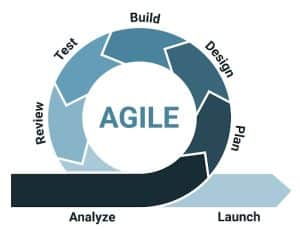
Teams plan a little. They built a little. They test right away. Then they do it again. This is an iterative approach. Old methods took 18 months for one release. New methods ship updates every week. Tools check the code automatically now. This keeps the path clean and fast.
What Is Modern Software Development?
Modern building breaks big goals into tiny pieces. Teams work in short rounds called “sprints.” Each sprint builds something real that people can actually use.
Agile Software Development and Iterative Delivery
Agile software development is the top choice today. It uses frameworks like Scrum to stay fast. Here is why it works:
- Sprints last only 1 to 4 weeks.
- Teams release small updates often.
- Customers give feedback every step of the way.
- Problems get fixed as soon as they appear.
Data shows agile software development projects succeed 42% of the time. Waterfall only hits 29%. That is a huge difference. It keeps everyone talking and moving.
Adaptive Software Development for Complex Projects
Some projects are very messy and change fast. That is where adaptive software development comes in. It is built for work that has no fixed map.
You don’t start with a giant plan. You start with an idea. The team learns while they build. They change the plan based on what happens next. Many AI startups use adaptive software development because the tech moves so quickly.
Traditional vs Modern: A Side-by-Side Look
Feature | Traditional | Modern |
Structure | Step by step | Flexible loops |
User Input | Only at the end | Every single week |
Speed | Slow and heavy | Fast and light |
Risk | High at the end | Low and steady |
,
What’s Driving Innovation in 2026?
AI is now a big part of the job. About 46% of code is made with AI help now. Tools like GitHub Copilot write simple code in seconds. This lets a software developer think about big problems instead of typing boring lines.
Cloud and Microservices
Teams don’t build one giant “brick” anymore. They build small services that work together in the cloud. If one part breaks, the rest stays up. This makes apps very strong.
The Changing Role of the Software Developer
The job is not just about coding anymore. Developers must handle security and testing, too. Software developers’ jobs are changing fast. Companies need “Cloud Architects” and “AI Engineers” more than ever. Today, software developers’ jobs are found in every kind of business.
When Traditional Development Still Makes Sense
Sometimes, the old way is the safe way:
- Building software for a spaceship.
- Medical tools that must follow strict laws.
- Large government systems that cannot change.
- In these cases, a slow and steady plan is the right call.
Choosing the Right Approach for Your Business
Neither way is always “best.” Waterfall gives you a clear map. Agile gives you speed. Adaptive software development gives you a way to survive change.
The best teams in 2026 use a mix. They stay stable but stay fast with agile software development. Your choice is a business strategy, not just a tech one.
Partner with 5StarDesigners to Build What’s Next
5StarDesigners helps you move from old ways to modern solutions. We build cloud-native apps and use agile workflows to get results. Let us turn your big idea into a real product.
Let’s Build Something Future-Ready
FAQs
How does agile software development improve project efficiency?
It lets teams find bugs early. Instead of waiting a year, you see progress in two weeks. This saves money and keeps users happy.
What is adaptive software development, and when is it used?
Use it when you aren’t sure what the final product will look like. It focuses on learning and reacting. It is perfect for new AI products.
What are the most in-demand software developer jobs right now?
Full-Stack Developers and AI Engineers are the top picks. Companies also want DevOps experts to help ship code faster and more safely.