
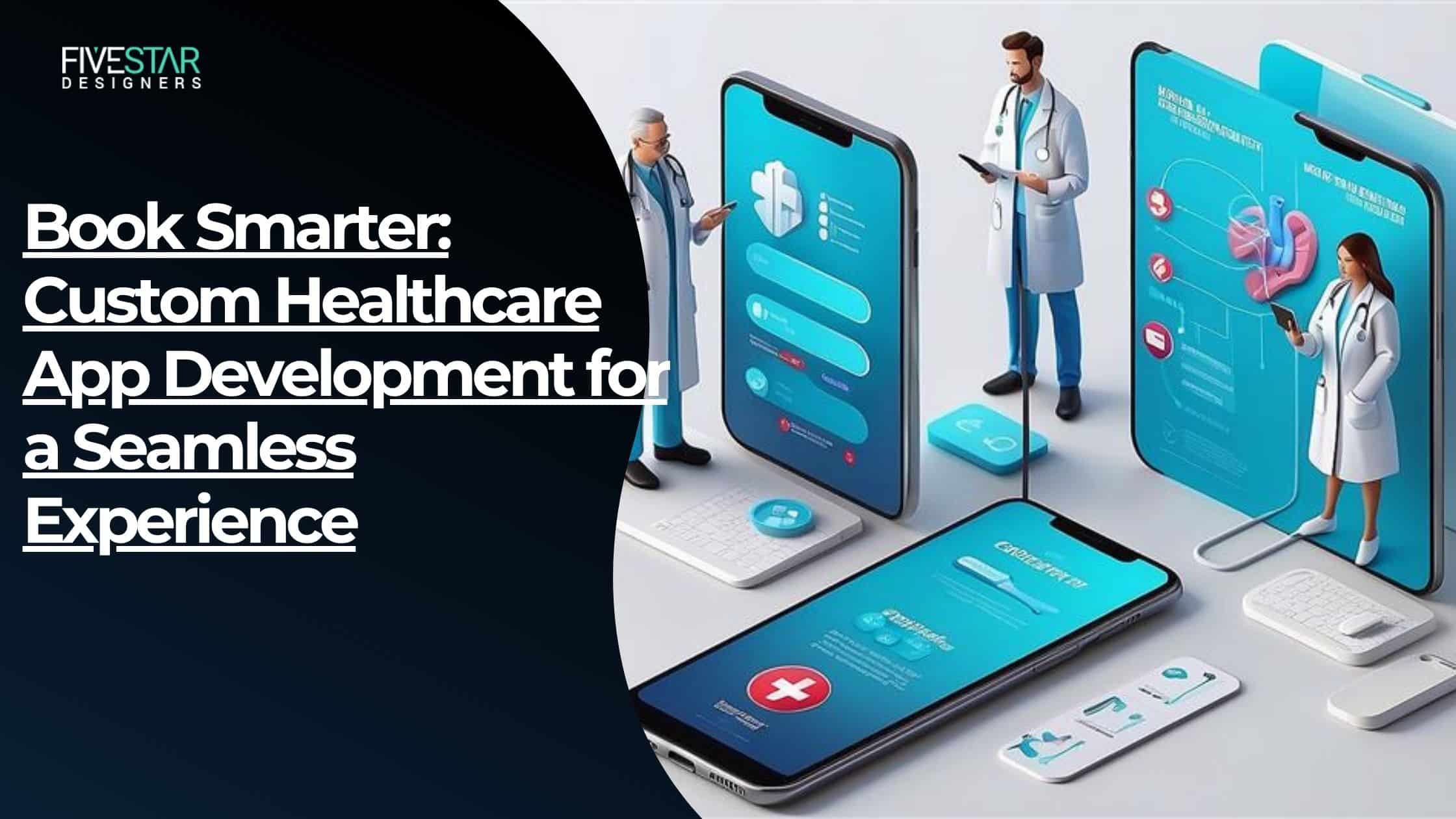
The healthcare industry comprises of some of the most advanced technological feats that provide primary care to patients however, a lack of advancement can clearly be observed in the communication aspect between systems and patient experience.
This leaves the perfect opportunity for smart businesses to invest in high-end healthcare booking app development targeting multiple bases where a single system is interoperable by managing clinical workflow, data sovereignty, and patient experience that further improves and polishes better healthcare outcomes.
Let’s take a look at how you can envision your very own smart healthcare appointment app that can integrate scheduling, revolutionize telehealth along with professionally crafted interoperability setup that tie a neat bow over your all in one healthcare solution.
Defining a Healthcare Scheduling System
Core Responsibilities
A healthcare scheduling system operates by handling the complete appointment process which includes a clinical roster that showcases all physicians and practicioners with their available hours in real time, information on their capacity to accommodate patients per day.
Data Flow And Compliance
Healthcare systems at their core, are extremely strict when it comes to information and data handling as every record of all events are audited along with encryption of sensitive information in adherence to HIPAA is mandatory. Compliance with regional laws and policies should also not be overlooked.
Physician Scheduling Software: Benefits And Limitations
Upsides
Physician scheduling software automates slot assignments and manages the scheduling whilst minimizing missed appointments which reduces lost revenue and increases efficiency by handling latency in administration all while improving patient care experience.
Constraints
Legacy EMR connectors present impedance mismatches. Resource contention can manifest when multiple intake channels attempt concurrent slot claims. Performance engineering must prioritize optimistic concurrency and idempotent APIs.
Creating Custom Healthcare Scheduling Software
Architectural Patterns
Adopt an event driven core backed by CQRS for separation of read workloads from write intent. This enables high throughput during peak booking windows, with eventual consistency across caches.
Implementation Notes
- Use idempotency keys for booking commands.
- Employ optimistic locking on resource calendars.
- Offer feature flags for incremental rollout.
Integration Strategy
Design adapters for common FHIR profiles and incremental sync mechanisms for legacy systems. A small translation layer reduces coupling and accelerates clinical integrations.
Essential Features Within Healthcare Scheduling Software Systems
Patient Facing Capabilities
A patient appointment app should provide rapid search, contextual availability, and soft confirmation mechanisms that accept asynchronous check ins via mobile push.
UX Considerations
- Simplify authentication while preserving security.
- Surface preparatory instructions within the booking flow.
Clinician And Admin Controls
Admins need roster management, blackout window configuration, and analytics dashboards exposing utilization metrics.
Scheduling Primitives
- Configurable shift blocks enabling differential appointment lengths.
- Rules engine for specialties that require preauthorization or ancillary resources.
Telehealth And Hybrid Workflows
Telemedicine app development must embed secure media sessions, session reconciliation, and meeting lifecycle hooks that record consent events.
Telehealth Operational Items
- Latency monitoring for media endpoints.
- Automated fallback routing when endpoints fail.
Security And Compliance Facility
Implement role based access control, audit event streams, and token lifecycle management. Key rotation policies must be explicit within deployment runbooks.
Data Residency
Offer tenancy segregation and encryption key management that aligns with institutional policies. This helps position Custom healthcare software as enterprise ready.
Performance, Observability And Reliability
Scalability Patterns
Horizontal scaling of stateless APIs combined with partitioned calendar shards reduces contention. Use backpressure signals inside task queues rather than silent drops.
Observability Stack
Instrument booking flows with distributed tracing and business metrics like mean time between booking and fulfillment. Alerts should map to SLAs that clinical operations accept.
Commercial And Deployment Considerations
Monetization And Product Scope
Healthcare software solutions may monetize via licensing, transaction fees, or value added modules such as analytics. Choose a go-to-market posture aligned with health system procurement cycles.
Deployment Models
Offer both SaaS offerings and on-prem deployments for clients demanding stricter control. An online doctor booking system often requires hybrid connectors that preserve local data residency.
Migration And Adoption Path
Incremental Rollout
Begin with a pilot covering a single specialty clinic. Use feature flags and shadow traffic to validate heuristics without impacting live patients.
Change Management
Train clinical staff on new workflows and instrument early feedback loops. Adoption succeeds when operational burden decreases while scheduling accuracy improves.
Final Considerations
Developing an enterprise-level telemedicine app requires alot more finesse than what your average workflow management app does as every aspect including the modular interfaces, smooth and reliable scheduling semantics, and encrypted media handling for confidentiality and privacy purposes demands the utmost discipline and skills.
For such a feat, you need to rely on any mobile app development company that specializes in providing custom healthcare software solutions. Smart businesses acknowledge the need for such advanced telemedicine apps to generate serious revenue and contribute to providing first-class service to the healthcare cause. So what are you waiting for? Book a free consultation with 5StarDesigners and take the initiative in a lesser crowded with rivals industry and become an icon in the healthcare management industry!
FAQs
Why do I need a custom healthcare app?
A custom app streamlines bookings, reduces wait times, and improves patient engagement. It also enhances data management and security. Increases efficiency.
What features can I expect in a custom healthcare app?
Features may include appointment booking, patient profiles, reminders, secure messaging, and payment integration. It can also include telemedicine and insurance claims. More features can be added.
Is my patient data secure with a custom healthcare app?
Yes, custom healthcare apps prioritize data security and comply with regulations like HIPAA. Secure data storage and encryption protect patient information. Regular updates ensure security.